JWT
What is JWT ?
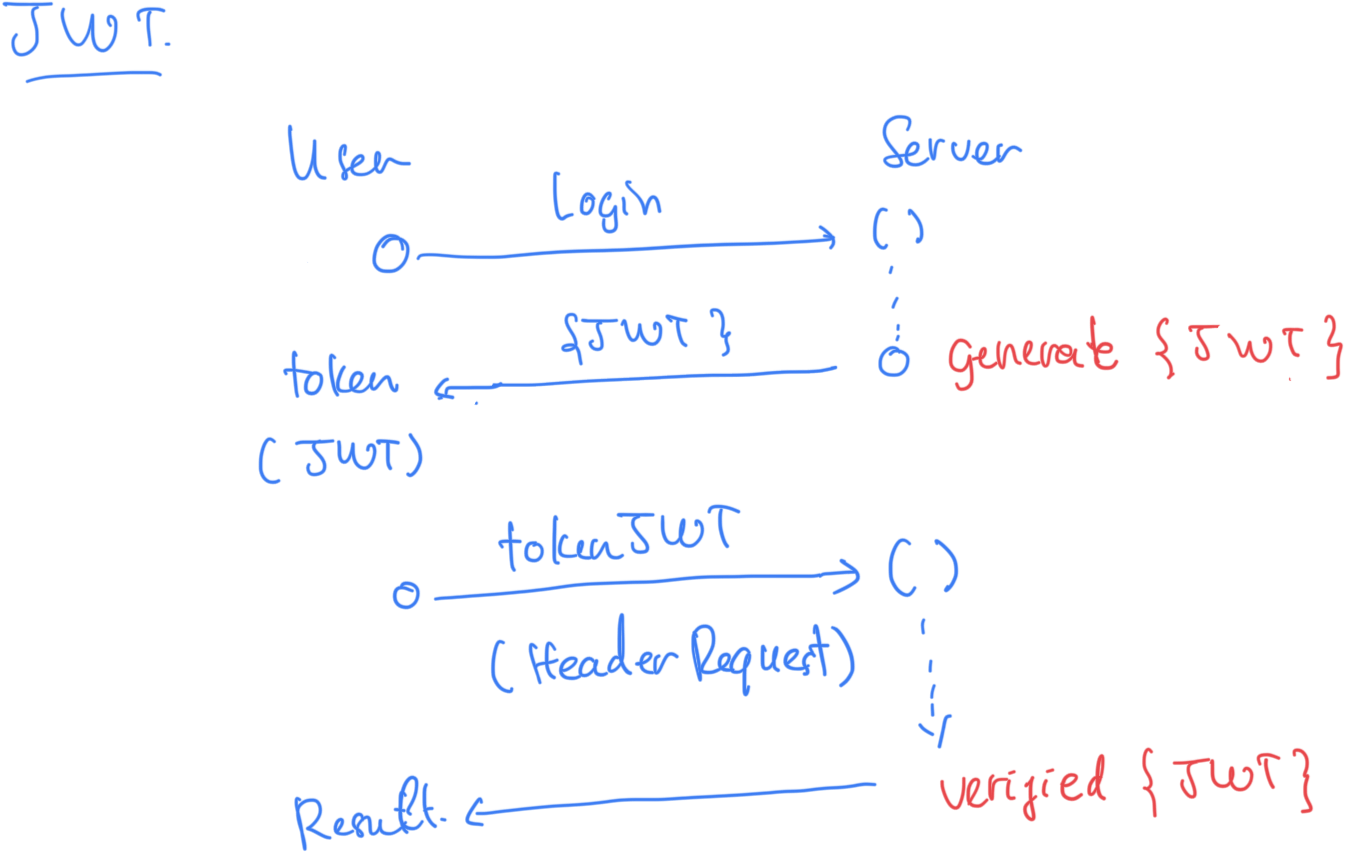
- JWT stands for JSON Web Token. It’s an open standard (RFC 7519) used for securely transmitting information between parties as a JSON object.
- JWT is a token format often used after authentication to maintain sessions.
Key Points About JWT
-
Structure: A JWT consists of three parts:
- Header: Specifies the token type (JWT) and the signing algorithm (e.g., HS256).
- Payload: Contains the claims (data), such as user ID, roles, or expiration time.
- Signature: Ensures the token hasn’t been tampered with. It’s created by hashing the header and payload with a secret key.
-
Format:
header.payload.signature(each part is Base64URL encoded). -
Purpose: Commonly used for authentication and authorization in web applications. For example:
- After a user logs in, the server issues a JWT.
- The client sends this token in the
Authorizationheader for subsequent requests. - The server verifies the token instead of storing session data.
-
Advantages:
- Stateless: No need to store session on the server.
- Compact: Easy to transmit via URL, header, or body.
- Secure: If signed and optionally encrypted properly.
-
Common Use Cases:
- API authentication.
- Single Sign-On (SSO).
- Mobile and SPA (Single Page Application) authentication.
Do you want me to show an example of how to create and verify a JWT in Python using PyJWT, or explain how JWT differs from OAuth tokens?
Minimal sample using JWT (Using HS256)
HS256: Share secret key (less secure)
Install PyJWT package
pip install PyJWT
!pip install PyJWT
Implement issue JWT (encode)
import jwt
from datetime import datetime, timedelta, timezone

# Algorithm to encrype
ALGORITHM = "HS256"
# Use a strong secret from env/config
SECRET_KEY = "super-strong-secret-change-me"

def create_jwt(user_id: str) -> str:
    now = datetime.now(timezone.utc)
    payload = {
        "user_id": user_id,                 # subject (user id)
        "issue_date": int(now.timestamp()),    # issued at
        "expired": int((now + timedelta(minutes=15)).timestamp()),  # expiration
        "iss": "your-app",              # issuer
        "aud": "your-client",           # audience
        "roles": ["user"]               # custom claim
    }
    token = jwt.encode(payload, SECRET_KEY, algorithm=ALGORITHM)
    return token

token = create_jwt("haiht")
print("JWT (HS256):", token)
Verify a token (decode)
import jwt


def verify_jwt(token: str) -> dict:
    try:
        decoded = jwt.decode(
            token,
            SECRET_KEY,
            algorithms=["HS256"],
            audience="your-client",
            issuer="your-app",
        )
        return decoded  # dict with claims
    except jwt.ExpiredSignatureError:
        raise ValueError("Token has expired.")
    except jwt.InvalidAudienceError:
        raise ValueError("Invalid audience.")
    except jwt.InvalidIssuerError:
        raise ValueError("Invalid issuer.")
    except jwt.InvalidTokenError as e:
        raise ValueError(f"Invalid token: {e}")

# Example usage
# claims = verify_jwt("haiht")

print(f"Token above: {token}")

claims = verify_jwt(token)

print("Verified claims:", claims)
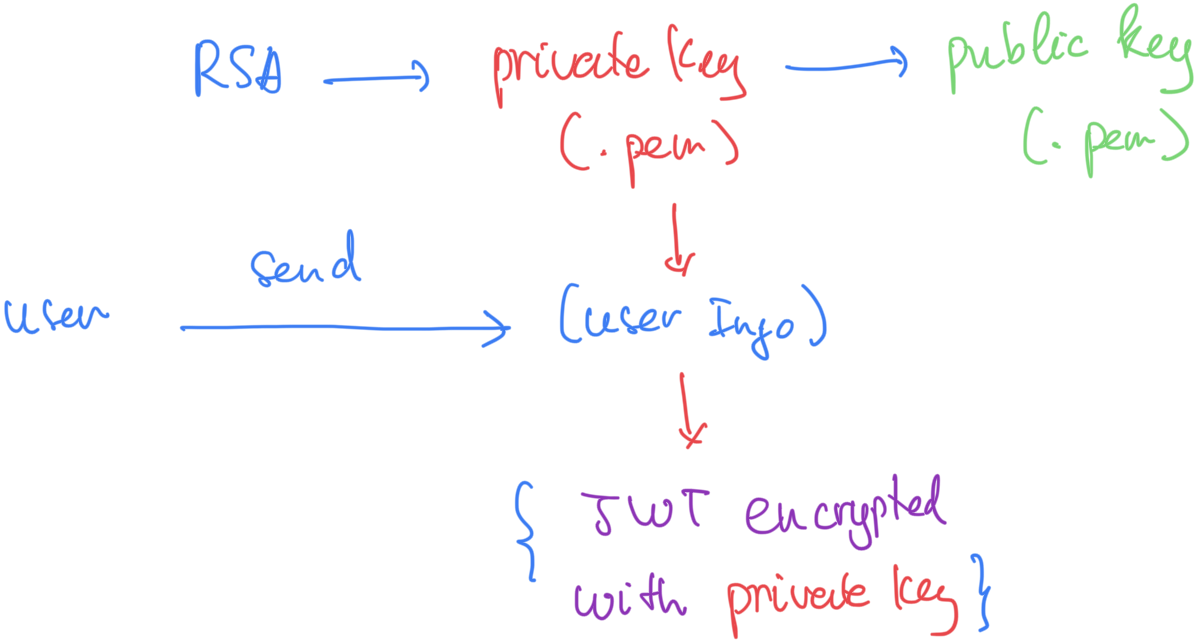
Minimal using (Public/Private key) Example
- Using
RS256
Install extra encryption package
pip install "pyjwt[crypto]"
!pip install "pyjwt[crypto]"
Create public/private key pair
# Private key
openssl genrsa -out private.pem 2048
# Public key
openssl rsa -in private.pem -pubout -out public.pem
You can run directly in Jupyter Notebook by adding !
# Private key
!openssl genrsa -out private.pem 2048
# Public key
!openssl rsa -in private.pem -pubout -out public.pem
Encode with private key
import jwt
from datetime import datetime, timedelta, timezone

def read_file(path: str) -> str:
    with open(path, "r", encoding="utf-8") as f:
        return f.read()

PRIVATE_KEY = read_file("private.pem")

# print(PRIVATE_KEY)

def create_jwt_rs256(user_id: str) -> str:
    now = datetime.now(timezone.utc)
    payload = {
        "user_id": user_id,
        "": int(now.timestamp()),
        "exp": int((now + timedelta(minutes=15)).timestamp()),
        "iss": "your-app",
        "aud": "your-client",
        "scope": "read:profile",
    }
    token = jwt.encode(payload, PRIVATE_KEY, algorithm="RS256")
    return token


token = create_jwt_rs256("haiht")
print("JWT (RS256):", token)
JWT (RS256): eyJhbGciOiJSUzI1NiIsInR5cCI6IkpXVCJ9.eyJ1c2VyX2lkIjoiaGFpaHQiLCIiOjE3NjQ3NDQzMTQsImV4cCI6MTc2NDc0NTIxNCwiaXNzIjoieW91ci1hcHAiLCJhdWQiOiJ5b3VyLWNsaWVudCIsInNjb3BlIjoicmVhZDpwcm9maWxlIn0.bU6cqzAJqs0NiwGhqY5ByuhEwfLEiePAZMJbqz15BXnkZQHKePzClVUNWnMTw9XP8d2nWeekAU2AK1nA3i7KPoMPjBF650nvKIsnLOKwcS2GKWtcR8RNcYKXZJ4BCnrwRBv0H8Wq1ElCIjWknB7CqmYR36njYr5i6S1DmHLc58FUmgteO8SIC3HWX5YPwSxsxItkOOF4H-IIzFXsO0OnLD8X5CRo089Uu9E9rrBi_kIny7fyLKpkbsnkRA8Qr_QfLlAj4rZe_rGgVPCn-5BzM02uDhyWnstEe6ov6lwiDlCsHLlWizjxq2Jumt3BFVIUF76Jp-jYapeSwnT8r2LYnQ
Decode with public key
import jwt

def read_file(path: str) -> str:
    with open(path, "r", encoding="utf-8") as f:
        return f.read()

PUBLIC_KEY = read_file("public.pem")

def verify_jwt_rs256(token: str) -> dict:
    try:
        decoded = jwt.decode(
            token,
            PUBLIC_KEY,
            algorithms=["RS256"],
            audience="your-client",
            issuer="your-app",
        )
        return decoded
    except jwt.ExpiredSignatureError:
        raise ValueError("Token has expired.")
    except jwt.InvalidAudienceError:
        raise ValueError("Invalid audience.")
    except jwt.InvalidIssuerError:
        raise ValueError("Invalid issuer.")
    except jwt.InvalidTokenError as e:
        raise ValueError(f"Invalid token: {e}")


# token = create_jwt_rs256("uhaiht")

print(f"Token above {token}")
claims = verify_jwt_rs256(token)
print("Verified claims:", claims)
Token above eyJhbGciOiJSUzI1NiIsInR5cCI6IkpXVCJ9.eyJ1c2VyX2lkIjoiaGFpaHQiLCIiOjE3NjQ3NDQzMTQsImV4cCI6MTc2NDc0NTIxNCwiaXNzIjoieW91ci1hcHAiLCJhdWQiOiJ5b3VyLWNsaWVudCIsInNjb3BlIjoicmVhZDpwcm9maWxlIn0.bU6cqzAJqs0NiwGhqY5ByuhEwfLEiePAZMJbqz15BXnkZQHKePzClVUNWnMTw9XP8d2nWeekAU2AK1nA3i7KPoMPjBF650nvKIsnLOKwcS2GKWtcR8RNcYKXZJ4BCnrwRBv0H8Wq1ElCIjWknB7CqmYR36njYr5i6S1DmHLc58FUmgteO8SIC3HWX5YPwSxsxItkOOF4H-IIzFXsO0OnLD8X5CRo089Uu9E9rrBi_kIny7fyLKpkbsnkRA8Qr_QfLlAj4rZe_rGgVPCn-5BzM02uDhyWnstEe6ov6lwiDlCsHLlWizjxq2Jumt3BFVIUF76Jp-jYapeSwnT8r2LYnQ
Verified claims: {'user_id': 'haiht', '': 1764744314, 'exp': 1764745214, 'iss': 'your-app', 'aud': 'your-client', 'scope': 'read:profile'}