Re-ranking
After performing Indexing and Retrieval steps, we obtain a list of Top-K potential documents. However, this list is often not optimal enough to feed directly into the LLM for two main reasons:
- Limited Semantic Accuracy: Embedding models prioritize optimizing retrieval speed on large amounts of data, thus forced to trade off the ability to understand complex semantic relationships between questions and texts.
- Information Noise: Found documents may contain many keywords matching the question but deviate in context or true intent, leading to providing inaccurate information to the LLM.
Re-ranking acts as a filter in the final step. We accept spending a little more time to "read carefully" a small set of candidates, e.g., 50 documents, and select the best documents, e.g., 5 documents, to send to the LLM.
Cross-Encoder
In the Retrieval step, we used Embedding models to encode questions and texts into vectors. Architecturally, this method is called Bi-Encoder. To understand why we need to add a Cross-Encoder at this step, let's compare their mechanisms.
Bi-Encoder vs. Cross-Encoder
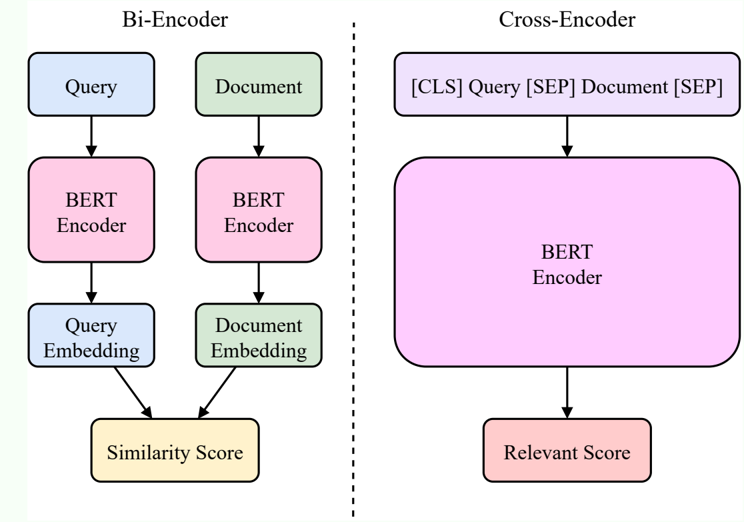 Figure 5: Comparing basic differences between two architectures.
-
Bi-Encoder is used when searching: Processes question and document separately. It creates a vector for the question, a vector for the document, then calculates the distance.
- Pros: Fast speed, calculations can be pre-computed.
- Cons: Loses detailed interaction information between each word in the question and each word in the document.
-
Cross-Encoder allows in Re-ranking: The question and document are concatenated into a single text sequence as in Figure 5. This sequence is fed into the model for processing simultaneously. The model will "read" in parallel and consider the interaction between every word of the question with every word of the document through a full Self-Attention mechanism.
- Pros: High accuracy, understands nuance, negation, and complex logic.
- Cons: Very slow and resource-consuming, cannot be used to search across the entire database.
Funnel Strategy: Because Cross-Encoder is slow, we do not apply it to all data. The standard process in practice is:
- Retrieve: Use Bi-Encoder to quickly get Top 50 documents from millions of documents.
- Re-rank: Use Cross-Encoder to re-score these Top 50 documents.
- Select: Take the Top 5 documents with the highest scores after re-scoring to put into context for the LLM.
Example of Cross-Encoder power

Query: "What does Python not eat?"
- Bi-Encoder: May return documents containing keywords "Python", "eat", "food" such as: "How to feed Python pythons rats", "Food of python species". May search with wrong intent because it only catches keywords.
- Cross-Encoder: When reading both the question and document at the same time, it recognizes the negation structure "not eat" and biological context, thereby ranking high the document: "Python pythons can fast for months...".
Maximal marginal relevance (MMR)
Sometimes, finding the most similar documents is not the best thing.
Suppose a user asks: "Biography of Steve Jobs". If based only on similarity, the system may return 5 nearly identical text paragraphs, all talking about him founding Apple in 1976. This wastes the LLM's context window without providing new information.
MMR solves this problem by balancing two factors:
- Relevance: The document must be related to the question.
- Diversity: The document must be different from previously selected documents.
Operating Principle of MMR
- Select the document with the highest similarity to the question.
- Find the next document such that it is both similar to the question and least similar to the document selected in Step 1.
- Repeat until there are enough Top-K documents.
Simplified Formula:
Where is the adjustment parameter, usually 0.5. If is smaller, the system prioritizes diversity more.
MMR Illustrative Example
Query: "Features of VinFast VF8 car."
Result without MMR:
- Doc 1: VF8 has a powerful 402 horsepower electric motor.
- Doc 2: Maximum power of VF8 is 300kW (equivalent to 402 horsepower).
- Doc 3: VF8 engine gives impressive acceleration capabilities. → Information is completely repeated regarding the engine.
Result with MMR:
- Doc 1: VF8 has a powerful 402 horsepower electric motor. (Selected because most similar to question).
- Doc 2: ADAS driver assistance system on VF8 includes lane departure warning... (Selected because content differs from Doc 1).
- Doc 3: 10-year warranty policy for VF8 battery. (Selected because differs from Doc 1 and Doc 2). → LLM has enough data to answer comprehensively about engine, safety, and after-sales.
In summary, choosing a Re-ranking method depends on the goal: If you need extremely accurate answers for difficult questions, use Cross-Encoder. If you need general answers covering many aspects, use MMR.